Deep Ocean Megalodon Tooth Hunter Specialty
This course was authored by owner Paul Lenharr and is EXCLUSIVELY offered only at Southern Maryland Divers, LLC
These classes are offered with select Meg Tooth Charters offered by us. You can sign up for this course when you sign up for one of our Meg Tooth Charters.
Availability: Contact us for booking information

Deep Ocean Megalodon Tooth Diver (PADI Distinctive Specialty)
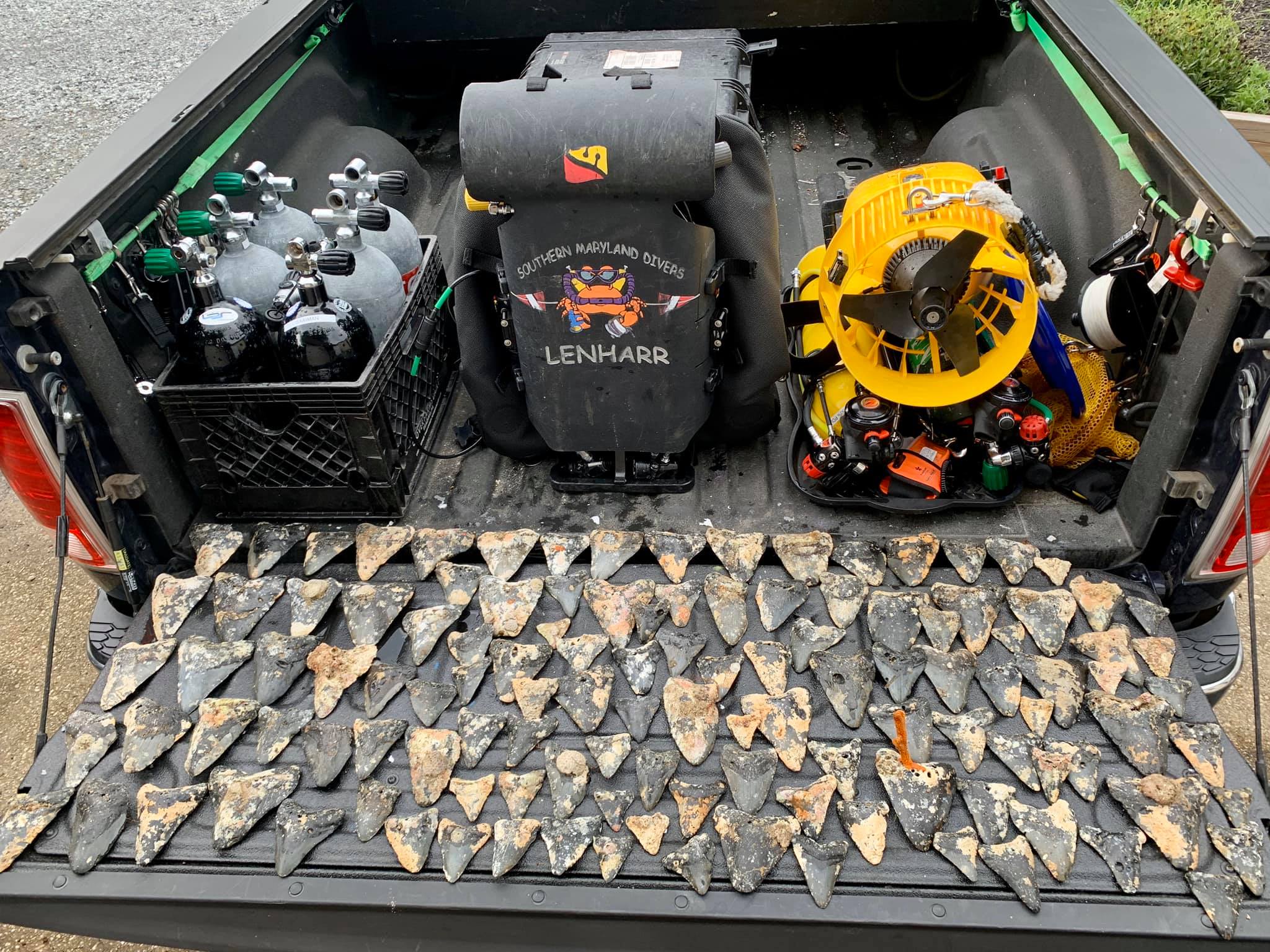
Ever wanted to bring home a literal piece of deep-time prehistory? This Distinctive Specialty is built around doing exactly that—safely, methodically, and with a light touch on the environment. You’ll learn how to plan and execute deep boat dives specifically for locating, collecting, and caring for fossil Megalodon teeth, using proven search techniques and the right specialty gear.
What this specialty is (and isn’t)
This course is a safe, supervised introduction to deep ocean Megalodon tooth diving. The point is to give you a systematic, methodical approach to searching within recreational limits—while avoiding unnecessary disturbance to marine life and the bottom.
It’s not a “thrash the bottom until you win” treasure hunt. It’s disciplined, buoyancy-controlled, awareness-heavy diving with a very specific mission.
Prerequisites
To start the course, you must be:
-
PADI Advanced Open Water Diver (or qualifying certification) - Also a charter requirement
-
PADI Nitrox Certification (or qualifiying certification) - Also a charter requirement
-
Minimum age: 15
Course structure
You’ll complete:
-
Knowledge Development (classroom-style learning) - usally taught the night before or the morning of the dives
-
Optional confined water session (used when specialty equipment or skills need review)
-
Two open water training dives (from a boat, following local procedures)
Important: If you’re not already comfortable with any required specialty equipment, the instructor must review and demonstrate it, and you must satisfactorily demonstrate use in confined water before open water dives.
What you’ll learn
1) Local boat + collection procedures (the “don’t be that diver” module)
You’ll learn how to determine local boat and fossil-collection procedures, including what to review before collection dives—boat protocols, descent/ascent procedures, recall procedures, depth-related risks (NDT limits, narcosis, DCS), conditions, buddy/situational awareness, and more.
2) How to identify Meg teeth (so you don’t bring up triangle-shaped sadness)
You’ll learn the distinguishing characteristics of Meg teeth, including:
-
Size
-
Shape
-
Color
-
Serrations
3) Search + collection techniques
You’ll train two core approaches used in real-world Meg tooth dives:
Direct Sight method
-
Swim close to the bottom and visually scan for the triangular profile of teeth.
Fanning method
-
Gently fan loose rubble/sand to expose potential teeth while minimizing silting and disturbance.
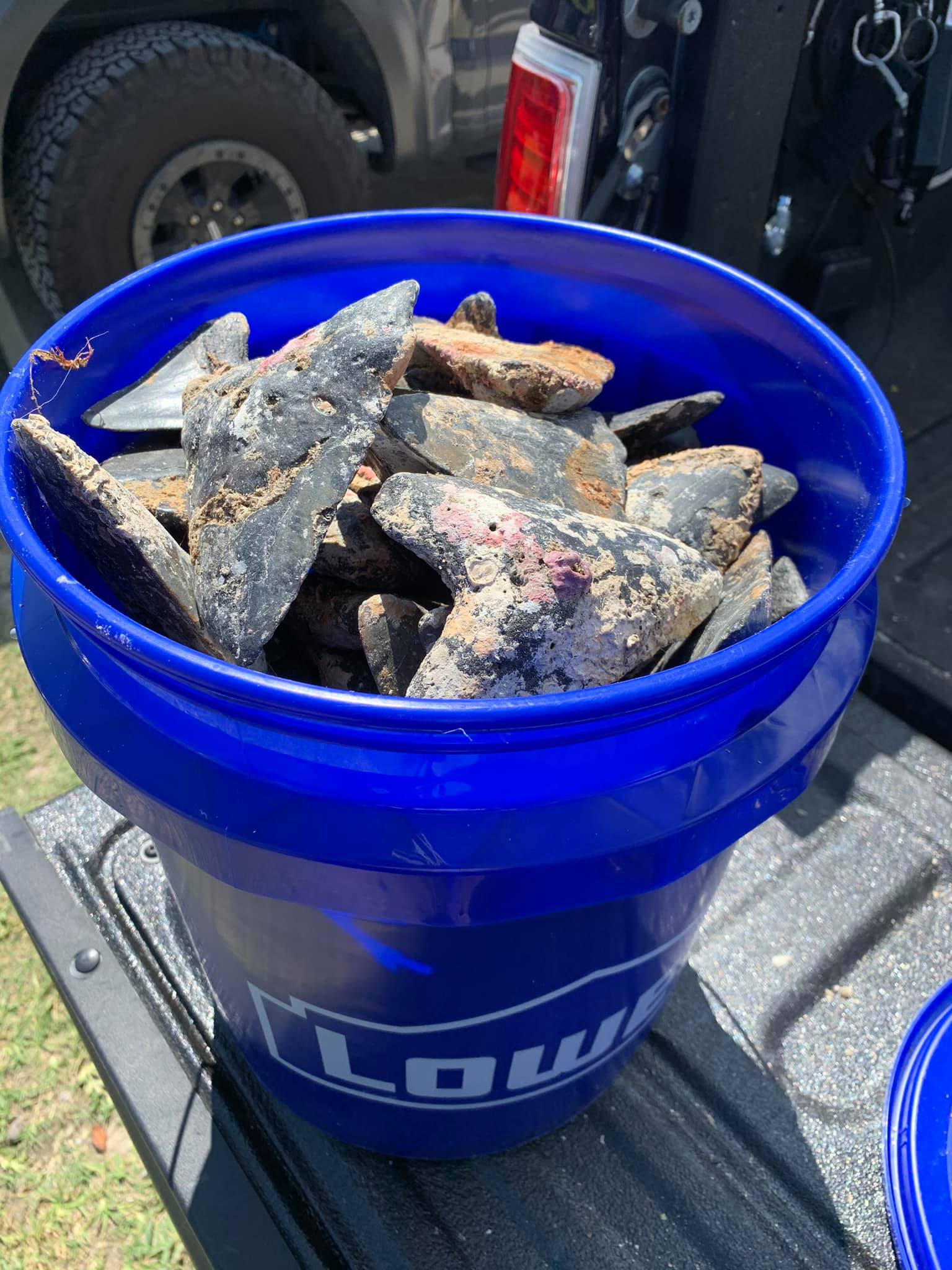
You’ll also cover how teeth are normally carried back to the boat (typically in a goodie bag, sometimes a BC pocket—though teeth can damage pockets).
4) Environmental responsibility
This course explicitly builds in environmental considerations—especially avoiding excessive silting from fanning and avoiding disturbing sea life (including organisms encrusted on teeth). You’ll also learn to be aware of local ordinances affecting fossil collection.
5) Cleaning and preserving your finds
You’ll learn common methods for cleaning Meg teeth, including:
-
Natural look (freshwater rinse, air dry—often outdoors/sunlight; no scrubbing)
-
Full cleaning (carefully monitored vinegar/water soak, brushing, frequent rinsing; prolonged vinegar exposure can damage/discolor teeth)
You’ll also cover required materials (bucket, water, optional brushes/vinegar) and safety precautions like eye protection and handling acids responsibly.
Equipment you’ll use
In addition to standard dive gear, this specialty commonly involves:
-
Guide reel (per local procedures)
-
Goodie bag
-
Dive computer
-
Surface signaling gear (SMB + reel, mirror and/or sound device)
-
Emergency back-up air supply
-
Spare parts kit
Open Water Dives (what actually happens)
Dive One — Direct Sight Search
Goal: Use the Direct Sight method to search for Meg teeth from a boat, while maintaining strong situational awareness and following local collection procedures.
Dive Two — Fanning Search
Goal: Use the Fanning method to search for Meg teeth from a boat, while maintaining strong situational awareness and following local collection procedures.
Both dives include thorough briefings (conditions, site logistics, entry/exit, depth range, tank pressure limits, sequence, etc.), debriefing, and logging/sign-off.
Certification
Complete all performance requirements for both Open Water Dives One and Two, and you earn the Deep Ocean Megalodon Tooth Diver Specialty certification, indicating you’re qualified to plan and conduct dives in conditions comparable to (or better than) training conditions.
Why take it?
Because holding a 5-inch Meg tooth that hasn’t been touched by a human until you uncovered it is the kind of “real-world magic” that turns divers into lifelong story-tellers.